

A young graduate leaving an Italian Higher Technical Institute (ITS) today is about to embark on a career that could span approximately 40 years. Preparing these future maritime professionals from day one means laying the foundations for the safety and efficiency of global shipping in the decades ahead. But what does it take to ensure the success of this process?
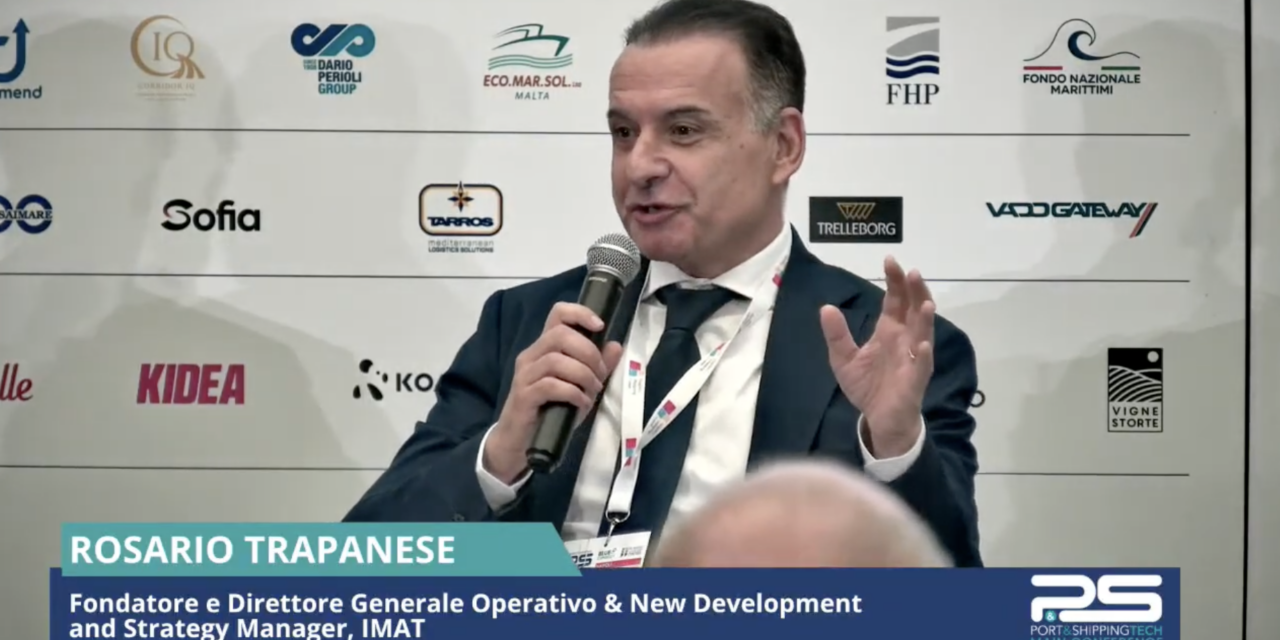
Captain Rosario Trapanese, Director of New Development and Strategy at IMAT – Italian Maritime Academy Technologies, outlined the key priorities for the future of maritime training during his presentation at the panel discussion “MARITIME PROFESSIONS AND JOBS: Training, Technologies, Career Development and Welfare”, held as part of the 18th Port and Shipping Tech event during Naples Shipping Week 2026.
According to Trapanese, the first and most essential prerequisite is proficiency in English. In the maritime industry, English has long ceased to be merely a cultural or educational requirement: it has become a fundamental component of operational safety.
“Without fluency in English, onboard operations simply grind to a halt. Poor language skills prevent seafarers from properly understanding operating manuals, training documentation and the technical specifications of new technologies. This is why teaching Maritime Technical English from secondary school through to Higher Technical Institutes has become a conditio sine qua non for enabling officers to perform their duties safely.”
Another major challenge is keeping pace with the technological gap created by the introduction of increasingly advanced onboard systems.
“As far as navigation is concerned,” Trapanese pointed out, “we have now achieved a good level of standardisation. However, the situation is very different when it comes to marine engineering systems. Technologies are evolving rapidly, and solutions once considered outdated, such as turbine technology, are making a comeback alongside energy recovery systems and cogeneration technologies.”
This growing complexity calls for “an intensive and targeted approach to upskilling.”
“Training is not limited to young cadets. It also involves senior maritime professionals with many years of experience, including masters, chief engineers and senior technical personnel, who are increasingly required to operate and manage highly energy-efficient machinery and systems.”
To address this challenge, IMAT has introduced a groundbreaking approach to maritime training, moving beyond the limitations of virtual simulation to provide hands-on experience with state-of-the-art, fully operational engine room installations.
“Training on real machinery and systems operating at full capacity fundamentally transforms the way maritime personnel are prepared. Instead of relying on abstract models, trainees work directly with equipment identical to what they will encounter on board.”
This approach also provides a decisive advantage in terms of emergency preparedness and response.
“When an operational alarm is triggered, the officer will not waste valuable time trying to identify the cause. Having already experienced that specific malfunction first-hand and successfully diagnosed and rectified the actual fault during training, they will know exactly how to respond.”
A prime example of this shift towards practical, hands-on training is the Marine Refrigeration Training School, a project developed in collaboration with major shipping companies such as MSC Explora.
“Every week, on an ongoing basis, technicians and refrigeration engineers already serving on board undergo refresher training, rigorous competency assessments and specialised training programmes designed to prepare them for three internationally recognised technical certifications.”
Specifically, these include EPA Certification, essential for refrigerant-related operations in US waters and ports; F-Gas Certification, required to comply with European regulations governing fluorinated greenhouse gases; and Brazing Qualification Certificate, which is fundamental to ensuring that complex technical work, particularly on refrigeration systems and associated pipework, is carried out to the highest professional standards.
“Ensuring that shipboard technicians simultaneously hold all three internationally recognised qualifications represents a strategic achievement for shipping companies and an immense source of professional pride for the maritime industry as a whole.”