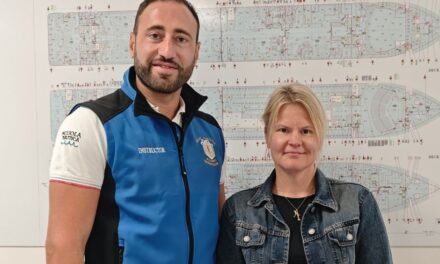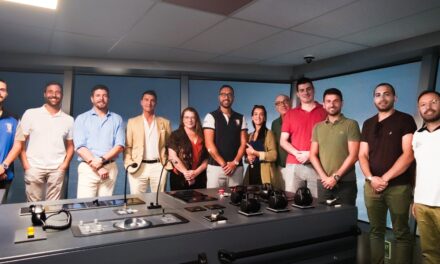


Interview with Erminia Della Monica, Sole Administrator of IMAT
The first international survey conducted by the IMO on female employment in the maritime sector dates back only to 2021. Scheduled to be repeated every three years, the survey confirms the substantial male dominance in a traditionally male-oriented industry: women make up less than 2% of the global seafaring workforce.
Despite numerous barriers to entry—particularly in leadership positions—some cracks are beginning to appear. Opportunities are increasing exponentially, driven by a technological revolution that is transforming the operational nature of maritime work. More importantly, awareness and efforts to break down discrimination and stereotypes are gaining momentum. Women in the “blue economy” are networking and determined to influence change. Among these trailblazers is Erminia Della Monica, Sole Administrator of IMAT, a rare example of a woman in a top leadership role within maritime training—a sector that effectively serves as the gateway to maritime careers.
From your unique vantage point, what changes have you observed in recent years?
Currently, women make up around 20% of participants in our training courses. Compared to the IMO’s global figures, this is a significant result and reflects steady growth. There’s greater awareness of the career opportunities the maritime sector can offer. But perhaps even more notable is the cultural shift within shipping companies: there’s growing trust in the skills and capabilities women bring to this field.
What has triggered this shift in perception?
Technological advances are changing onboard operations, making the environment more accessible and requiring traits such as determination, adaptability, and strong interpersonal skills—qualities in which women often excel. This has also influenced career ambitions. More women now aspire to become officers or take on leadership roles. The signs are encouraging, but there’s still work to be done.
How can we further encourage female participation in the maritime sector?
We must work toward broadening awareness of the issue. In a traditionally male-dominated environment, associations like WISTA Italy have been promoting female participation for nearly 30 years. A strong women’s network has emerged, collaborating with other organizations like the Italian Maritime Cluster to promote a fairer, more innovative maritime future. Recently, WISTA Italy was hosted at the Italian Parliament, where the book “Women on the Bridge” was presented—a tribute to the growing presence and leadership of women in the maritime sector.
What emerged from that meeting?
Firstly, confirmation that, despite positive signs, there’s still a long way to go. Looking at the entire transport and logistics sector, female representation remains minimal: 2% in maritime, 13% in logistics. In ports, women make up just 6% of workers under Article 16 (port services and operations), 1.7% under Article 17 (temporary labor), and 8% under Article 18 (terminal operators). Although women account for 47% of staff in port authorities, they rarely reach governance roles: in 30 years of port reform, only 2% of presidents and 10% of secretaries have been women. At the same time, the event highlighted how low female employment is a broader issue for the future of the national system. As Costanza Musso, President of WISTA Italy, pointed out, several studies show that female leadership enhances economic performance and organizational resilience. Therefore, removing barriers to support this trend is essential—starting, for example, with awareness-raising initiatives in middle schools.
What impressed you most about your experience with WISTA Italy?
Without a doubt, the opportunity to share experiences, expertise, and passion. I was able to promote awareness of maritime training—a highly specialized field essential to the professional development of a workforce facing an increasingly competitive labor market. At the same time, I gained new insights from other areas of the blue economy. It was a valuable exchange that can only enrich us all.
Any advice for young women interested in a maritime career?
I’ve said this on other occasions: my advice is to give it a try. Explore whether this world can spark your interest. There are many opportunities, and with curiosity and initiative, it’s possible to achieve great satisfaction.